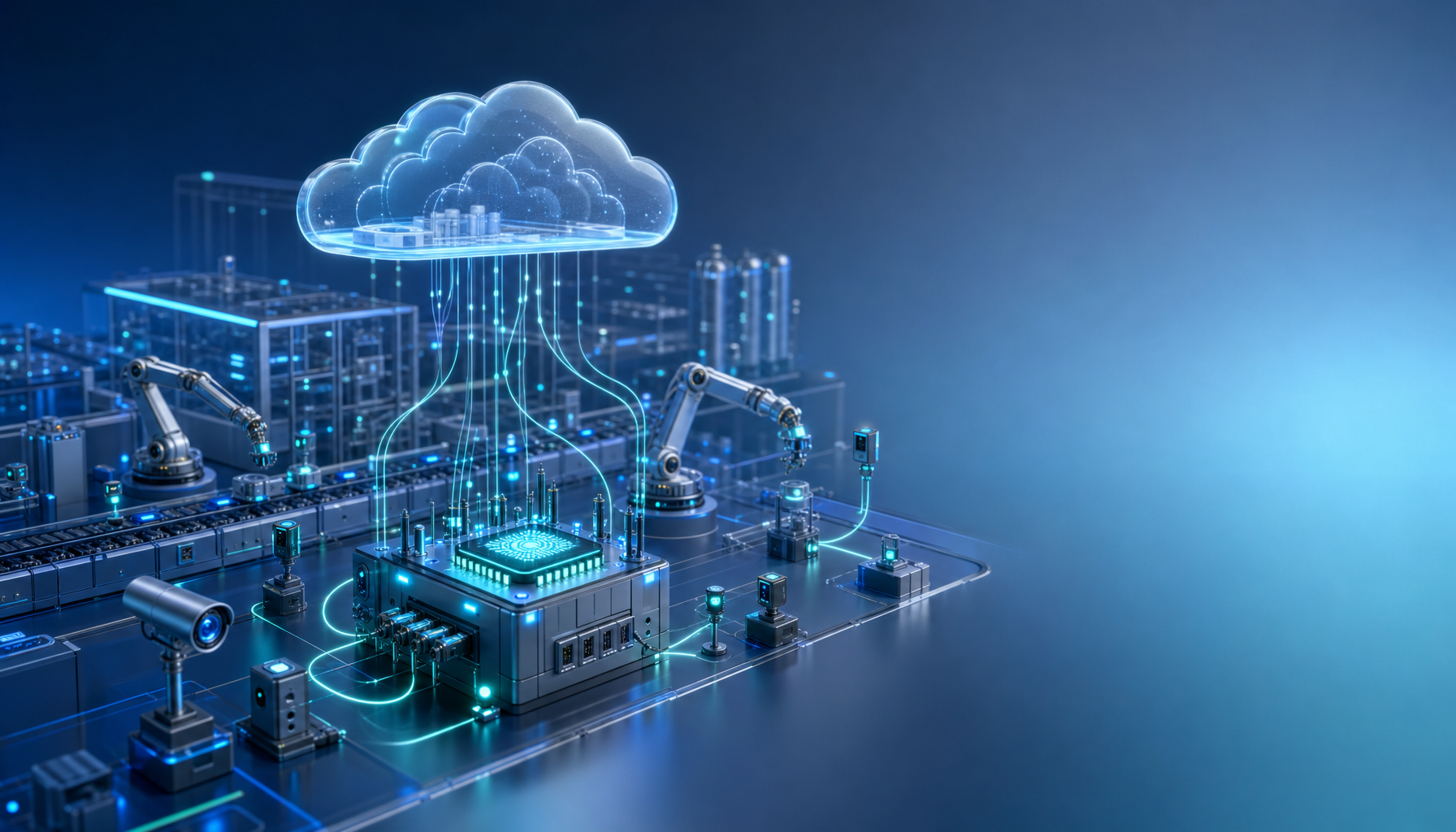
Cloud 3.0 and Edge Computing are changing where AI actually runs: not only in centralized cloud regions, but near cameras, sensors, vehicles, factories, and phones. If you are building real-time AI, this shift is not optional. It is the difference between a useful system and an expensive dashboard that reacts too late.
I think of Cloud 3.0 as the next architecture layer: cloud-native foundations, plus distributed compute, plus AI workloads pushed closer to the data source.
Why Cloud 3.0 and Edge Computing Matter Now
Cloud 1.0 gave us elastic servers. Cloud 2.0 gave us containers, serverless, managed databases, and microservices. Cloud 3.0 adds location-aware compute.
That matters because AI is becoming operational. It is no longer just batch analytics or chat interfaces. AI now decides whether to stop a machine, detect a traffic violation, flag a medical anomaly, or reroute a delivery vehicle.
Those decisions cannot always wait for a round trip to a faraway region.
The Latency Math Favors Edge AI
Every network hop costs time. For a typical web app, 150ms may be acceptable. For an AI camera at an intersection, an industrial robot, or an autonomous drone, 150ms can be too slow.
Edge AI reduces latency by running inference near the data:
- A camera detects objects locally instead of uploading full video.
- A factory gateway predicts equipment failure before data reaches the cloud.
- A smart traffic signal adjusts flow based on local vehicle density.
- A retail store detects queue length without streaming customer video to a central server.
The cloud still matters. It trains models, aggregates history, manages deployments, and monitors fleets. But the first decision often belongs at the edge.
Lower Cloud Costs, Less Data Movement
The hidden cost in AI systems is not always compute. It is data movement.
Raw video, sensor streams, telemetry, and logs can explode bandwidth bills. Sending everything to the cloud is simple, but rarely efficient. A better pattern is to process locally, send summaries, and keep only valuable events.
For example, instead of uploading 24 hours of CCTV footage, an edge device can send:
- Object counts every minute
- Short clips for anomalies
- Metadata for search
- Model confidence scores
This reduces bandwidth, storage, and downstream processing cost. It also improves privacy because sensitive raw data can stay closer to where it was created.
A simple edge worker might look like this:
export default {
  async fetch(request, env) {
    const reading = await request.json();

    if (reading.temperature > 80 || reading.vibration > 0.9) {
      await env.QUEUE.send(reading);
      return Response.json({ alert: true });
    }

    return Response.json({ alert: false });
  }
}
That is not a full AI pipeline, but the pattern is real: filter, infer, alert, sync.
IoT Devices and Smart Cities Need Distributed Intelligence
IoT devices are only useful when they can act within their environment. Smart cities make this even more obvious.
A city may have thousands of sensors across roads, parking lots, water systems, public transport, and energy grids. Centralizing every decision creates bottlenecks. Edge computing lets each zone respond locally while still feeding the larger platform.
For production systems, I like this split:
- Edge: inference, filtering, local rules, emergency response
- Regional cloud: aggregation, orchestration, near-real-time analytics
- Central cloud: training, governance, reporting, long-term storage
Platforms such as AWS IoT Greengrass and Cloudflare Workers show how mainstream this model has become. The architecture is moving from one big brain to many smaller brains coordinated by the cloud.
Architecture Trade-Offs I Would Not Ignore
Edge computing is powerful, but it adds complexity. You now manage unreliable networks, device updates, model versioning, security patches, and observability across distributed locations.
The hard questions are practical:
- What happens when the edge device goes offline?
- How do you roll back a bad model?
- Which data must be stored locally versus synced?
- How do you secure devices outside your data center?
- Can your team debug production issues without SSH-ing into random boxes?
My rule: keep edge logic focused. Do time-sensitive work locally. Push non-urgent workflows to the cloud. Do not recreate your entire backend on every device.
FAQ
Is edge computing replacing the cloud?
No. Edge computing extends the cloud. Training, orchestration, analytics, and governance still belong largely in cloud platforms. Edge is for low-latency decisions and data reduction.
Why is edge AI important for smart cities?
Smart cities need fast local responses across traffic, safety, utilities, and transport. Edge AI allows each location to react immediately while sharing summaries with central systems.
Does Cloud 3.0 only apply to large enterprises?
No. Even smaller teams can use edge patterns through managed IoT platforms, serverless edge runtimes, and lightweight on-device models. Start with one latency-sensitive workflow.
Conclusion
Cloud 3.0 and Edge Computing are the future of AI because they match how real systems behave: distributed, data-heavy, latency-sensitive, and cost-aware. The winners will not send every byte to the cloud. They will design intelligent systems that decide where each workload belongs.
If you are planning an AI, IoT, or smart city platform, reach out and let’s design the architecture before the cloud bill designs it for you.