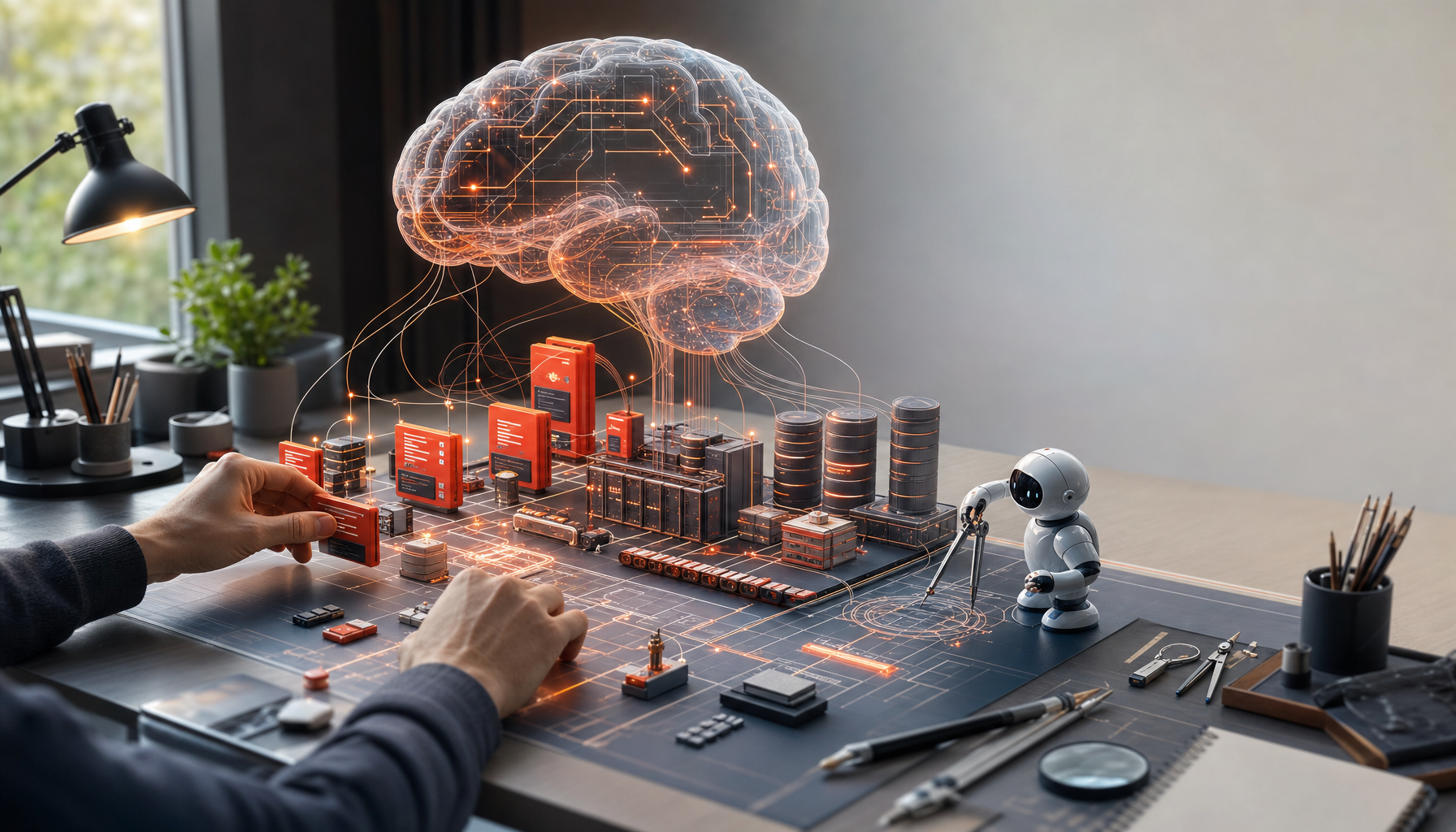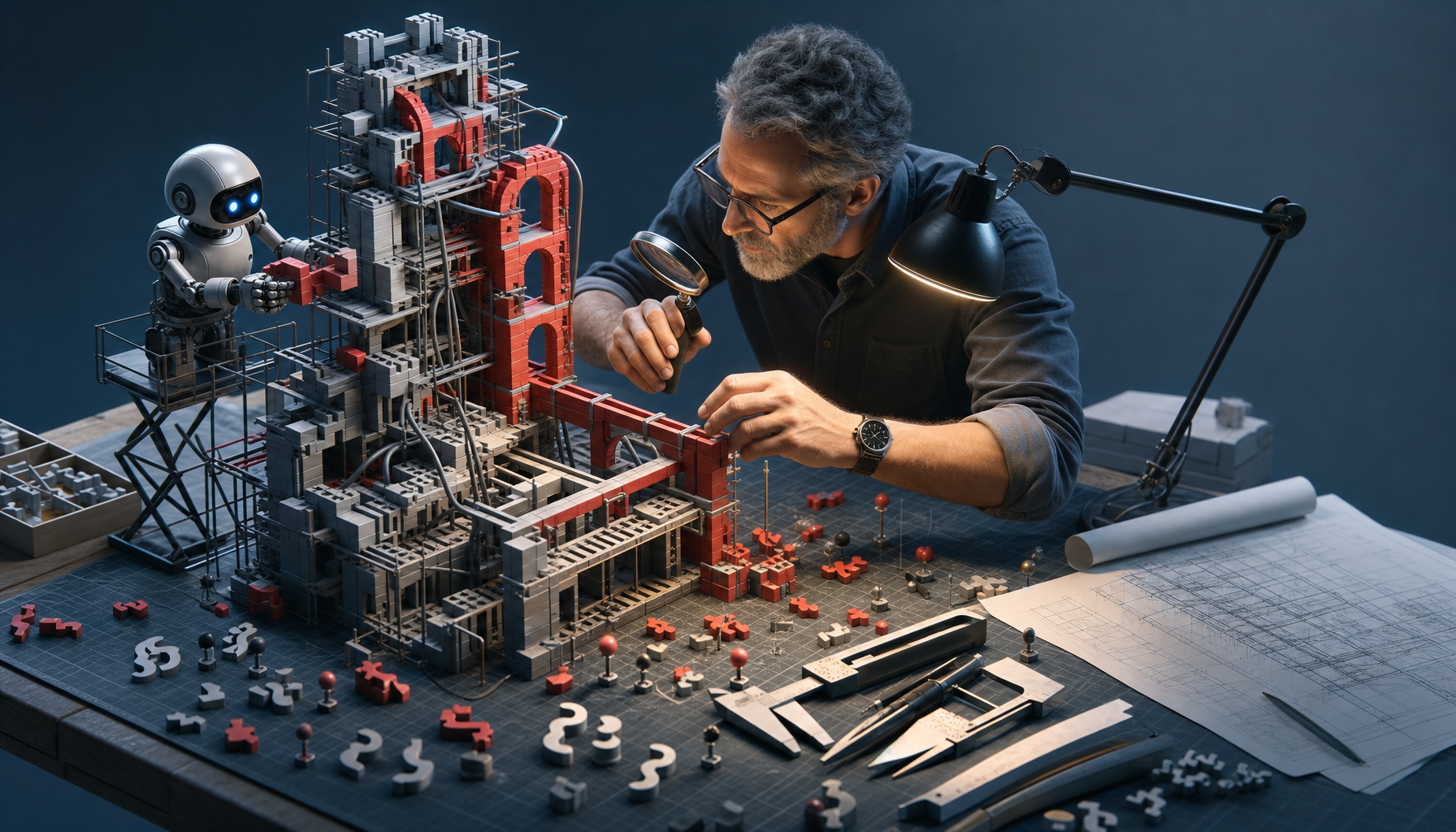
AI-generated code can get a feature moving in minutes. The problem starts three sprints later, when nobody understands why the code works, where the edge cases live, or how to safely change it.
I use GenAI regularly in full-stack work across Laravel, PHP, Node.js, React, and Vue. But I do not treat generated code as engineering output. I treat it as a draft from a very fast junior developer with no memory of my business domain.
Why AI-Generated Code Becomes a Maintainability Problem
AI-generated code usually optimises for plausibility, not long-term ownership. It often produces something that compiles, passes the happy path, and looks clean at first glance.
That is not the same as maintainable software.
The maintainability crisis shows up in a few predictable ways:
- Hidden duplication across services, controllers, and utility functions
- Missing domain language, so business rules become generic conditionals
- Weak error handling and no clear failure strategy
- Over-engineered abstractions copied from common patterns
- Tests that validate implementation details instead of behaviour
In a Laravel app, for example, AI may generate a controller that validates input, applies business rules, writes to the database, sends notifications, and formats the response in one method. It works today. It becomes painful when pricing, refunds, audit logs, or multi-tenant rules arrive.
Human Skill Is Still the Architecture Layer
Software architecture is not just folders, interfaces, and diagrams. It is the ability to decide what should change together and what must remain isolated.
AI can suggest a repository pattern. It cannot reliably know whether your team needs one. It can create microservice boilerplate. It cannot tell you whether the operational cost is justified.
That judgment comes from experience:
- Understanding the business boundary
- Choosing boring technology where possible
- Designing for the next real change, not imaginary scale
- Knowing when not to abstract
- Protecting the codebase from cleverness
This is why I still review generated code with the same seriousness as production code written by a developer. The Google code review guidelines make a useful point: code review is about improving the health of the codebase, not just catching bugs.
A Practical Example: From Generated to Maintainable
Here is the kind of generated Laravel code I often see in early drafts:
public function store(Request $request)
{
    $data = $request->validate([
        'amount' => 'required|numeric',
        'user_id' => 'required|exists:users,id',
    ]);

    $order = Order::create($data);

    if ($data['amount'] > 5000) {
        Mail::to($order->user->email)->send(new HighValueOrderMail($order));
    }

    return response()->json($order, 201);
}
This is fine for a demo. In production, I would move the business decision into an application service and keep the controller thin:
public function store(StoreOrderRequest $request, CreateOrderAction $createOrder)
{
    $order = $createOrder->execute($request->validated());

    return new OrderResource($order);
}
Now validation, orchestration, notifications, and API representation can evolve independently. Laravel gives us excellent primitives for this, including the service container, form requests, queues, events, and resources. AI can scaffold them. Human skill decides the boundary.
Code Review Must Change in the GenAI Era
When reviewing AI-assisted work, I ask different questions than I did five years ago.
My GenAI code review checklist
- Does this code express our domain clearly?
- Are edge cases handled or silently ignored?
- Is this abstraction solving a real problem?
- Can a mid-level developer change this in six months?
- Are tests covering behaviour, not just generated structure?
- Does the code fit our existing architecture?
The last point matters most. Maintainability is local consistency. A technically correct pattern can still damage a codebase if it does not match the surrounding system.
Technical Debt Now Accumulates Faster
AI lowers the cost of producing code. That also lowers the friction for producing unnecessary code.
A developer can now generate ten files instead of writing two. A team can ship a prototype that accidentally becomes the foundation. A manager can mistake velocity for progress because pull requests look bigger and faster.
The countermeasure is not banning AI. That is unrealistic and, frankly, wasteful. The countermeasure is stronger engineering discipline:
- Smaller pull requests
- Clear ownership boundaries
- Architectural decision records
- Automated tests around critical flows
- Observability before scaling complexity
For cloud systems, I still find the AWS Well-Architected Framework useful because it forces teams to think beyond code: reliability, cost, operations, security, and performance.
FAQ
Is AI-generated code bad for production?
No. Unreviewed AI-generated code is bad for production. Generated code should go through the same design, testing, security, and review process as human-written code.
Can junior developers rely on AI coding tools?
They can use them, but they should not outsource thinking. AI is useful for examples, boilerplate, and exploration. It is dangerous when it replaces debugging, reading documentation, and understanding trade-offs.
What is the biggest risk of AI-generated code?
The biggest risk is silent technical debt. The code may work, but it can hide weak boundaries, poor naming, missing failure handling, and duplicated business rules.
How do I keep AI-assisted code maintainable?
Start with clear requirements, ask AI for small units, review every line, refactor before merging, and write behaviour-focused tests. Treat AI as acceleration, not authority.
Conclusion: AI-Generated Code Still Needs Engineers
AI-generated code is not the enemy. The real risk is confusing code production with software engineering.
Human skill still owns architecture, maintainability, product context, and long-term trade-offs. The best engineers will not be the ones who avoid AI. They will be the ones who use it aggressively while keeping standards high.
If you are building Laravel, PHP, Node.js, or GenAI-heavy systems and want maintainability without slowing delivery, reach out to discuss your architecture.